All published articles of this journal are available on ScienceDirect.

Efficacy and Safety of a Dermatological Soap containing Ozonated Sunflower Oil (OSO), Sulfur, or Sulfur plus OSO and a Dermatological Cream containing OSO in Subjects with Scabies
 iD
Yenney Reyes Nuñez3
iD
Evelyn Anie González Pla4
iD
Yanay Fernández Domínguez4
iD
Alfonso Besú Mauri5
iD
Maria Elena Corrales Vázquez6
iD
Elena Caridad Megret Vidal6
iD
Damaris Sandoval Travieso6
iD
Sarahi Mendoza Castaño7
iD
Rolando Uranga Piña8
iD
Gladys Jiménez Rivero9
iD
Yaremis Cardero Fernández9
iD
Authors Info & Affiliations
Abstract
Introduction
To evaluate the efficacy and safety of a dermatological soap containing OSO, sulfur, or sulfur plus OSO and a dermatological cream containing OSO for 21 days in subjects with Scabies.
Methods
This is a short-term, open-label, randomized, comparative study on three parallel groups treated with either dermatological soap with OSO + dermatological cream-OSO, or with sulfur soap +dermatological cream-OSO, or with sulfur-OSO dermatological soap + dermatological cream-OSO. The treatment duration was 21 days. The primary efficacy endpoint was clinical cure or improvement and negative dermatoscopy.
Secondary efficacy endpoints included a significant reduction in the total score of the Eczema Area and Severity Index (EASI) and the total score of the Visual Analogue Scale (VAS), while the improvement in the EuroQol Quality of Life Questionnaire was assessed as a collateral efficacy variable. Treatments were considered effective if, at the end of the study, they resulted in a cure or clinical improvement and a negative dermatoscopy result compared to baseline. The safety analysis included the effects on the physical examination and laboratory indicators investigated, as well as the reported adverse events, which were classified according to their severity and relationship to the treatment. Statistical analysis of all data was performed according to the intention-to-treat principle.
Results and Discussion
The study included 75 subjects of both sexes diagnosed with scabies, who were randomly assigned to three groups (25/group) treated with either dermatological soap with OSO and dermatological cream containing OSO, or with sulfur soap and dermatological cream containing OSO, or with sulfur-OSO dermatological soap and dermatological cream containing OSO, respectively. All groups had similar baseline characteristics. The mean age of the study population was 69 years, and the sex distribution showed a predominance of female subjects (68/75, or 90.7%). No subjects dropped out of the study. At the end of the 21-day treatment period, 100% (75/75) of the subjects treated with the respective therapies achieved cure or clinical improvement. Regarding the clinical cure rate (absence of pruritus and skin lesions) and negative dermatoscopy (no presence of the parasite) (primary efficacy variables), treatment with Sulfur-OSO Dermatological Soap+OSO Dermatological Cream produced a cure rate and negative dermatoscopy in 80% (20/25) of the subjects, higher than that achieved in the groups treated with Sulfur Soap+OSO Dermatological Cream (64%, 16/25 subjects) or with OSO Dermatological Soap+OSO Dermatological Cream (60%, 15/25 subjects). Regarding secondary efficacy variables, all groups achieved a significant reduction (p<0.0001) in the total score of the EASI Scale and the total score of the VAS Scale (for pruritus), and a significant increase (p<0.0001) in the total score of the EuroQol (collateral efficacy variable) versus baseline values. The treatments showed a satisfactory safety and tolerability profile, and only three subjects in the group treated with sulfur soap + dermatological cream with OSO reported an adverse event classified as mild (allergic contact dermatitis) during the study.
Conclusion
Treatment with Sulfur-OSO Dermatological Soap + OSO Dermatological Cream showed superior efficacy compared to treatments with Sulfur Soap + OSO Dermatological Cream or OSO Dermatological Soap + OSO Dermatological Cream, respectively, in subjects with Scabies. The treatments were safe and well-tolerated.
1. INTRODUCTION
Scabies is one of the most common and widespread skin diseases worldwide. Millions of people may suffer from it at some point. It is highly contagious and associated with significant morbidity [1, 2].
There is no preventive treatment for scabies, and few broad-spectrum antiparasitic drugs (primarily topical permethrin and oral ivermectin) are available. Treatment failure is common because the drugs do not eliminate all developmental stages of the scabies mite, requiring at least two consecutive treatments, which is difficult to achieve given the nature of the populations affected. Furthermore, there is no practical, rapid, inexpensive, and accurate diagnostic tool for the early detection of scabies, which could prevent the cycle of exacerbation and persistence of the disease. Its control requires a multifaceted approach, supported by improved diagnostic and surveillance methods, new treatments, and greater public awareness [3-5]. Scabies can affect anyone, regardless of race, age, or personal hygiene habits. Scratching can lead to infection of the burrows, resulting in an eczematous rash or papular lesions on the skin between the fingers (interdigital spaces), the inner wrists, the front edges of the armpits, the inner elbows, the skin folds beneath the buttocks and abdomen, the breasts (in women), and the genital area (in men) [6, 7].
The main symptoms include itching, especially at night, fine, scaly lines on the skin, and excoriations or scratch marks. The rash appears as scattered wheals, papules, vesicles, and fine, slightly scaly pits or burrows. Excoriations and crusting from scratching may be observed in more advanced cases [8, 9].
In the elderly population, scabies outbreaks are relatively more frequent in nursing homes and healthcare facilities, where outbreaks have even been reported among healthcare staff [3]. Scabies lesions in the elderly often present atypically, frequently leading to a long delay in diagnosis and treatment. They are often mistaken for skin scratches caused by xeroderma, anxiety, or chronic illnesses.
Clinical studies conducted with Ozonated Sunflower Oil (OSO) have investigated its effects in the treatment of dermatological diseases and have shown it to be effective, safe, and well tolerated [10].
The efficacy of OSO, due to its acaricidal action, has been demonstrated in various animal species, including psoroptic rabbits, pigs with sarcoptic mange, demodectic goats, and dogs with generalized demodicosis [11, 12].
Furthermore, sulfur soap has proven effective in eliminating the mite responsible for mange, given its antimicrobial, disinfectant, and antifungal effects [13].
At the National Centre for Scientific Research, Havana, Cuba, several formulations for dermatological use have been developed, including a dermatological soap with OSO and a dermatological cream based on OSO. The dermatological soap with OSO has been used for the treatment of juvenile acne and for body cleansing, as it has germicidal, oxygenating, and skin-revitalizing properties. The results of biological studies have demonstrated that this product does not cause skin irritation or adverse reactions [14].
Given the background information presented, it was logical to expect satisfactory efficacy and safety of the treatment with dermatological soap with OSO, dermatological soap with sulfur, dermatological soap with sulfur+OSO, and dermatological cream with OSO in subjects with Scabies.
The objective of this study was to evaluate the efficacy and safety of a dermatological soap containing OSO, sulfur, or sulfur plus OSO and a dermatological cream containing OSO in subjects with Scabies.
2. MATERIALS AND METHODS
The study was conducted in accordance with the principles of the Declaration of Helsinki, the recommendations of the World Health Organization, and Cuban regulations on Good Clinical Practices. The study protocol was approved by the Ministry of Public Health and by the Ethics Committee in Clinical Research of the ¨10 de Octubre¨ Clinical Surgical Hospital (IRB-301123). This study was included in the Cuban Public Registry of Clinical Trials (RPCEC-00000439).
2.1. Study Design
This was a short-term, open-label, randomized comparative study. The study consisted of five visits: a recruitment visit in which the initial history was taken, and the tests to be performed were indicated (visit 1), an inclusion visit in which the treatments were delivered to the subjects who met the selection criteria (visit 2), and three follow-up visits at 7, 14, and 21 days of treatment (visits 3, 4, 5). At each visit, a physical examination was performed; during visits 3-5, adherence to treatment was monitored, and adverse events were assessed. The clinical evaluation and dermatoscopy were performed prior to visit 2 and at the end of treatment. The study flow diagram is shown in Fig. (1).
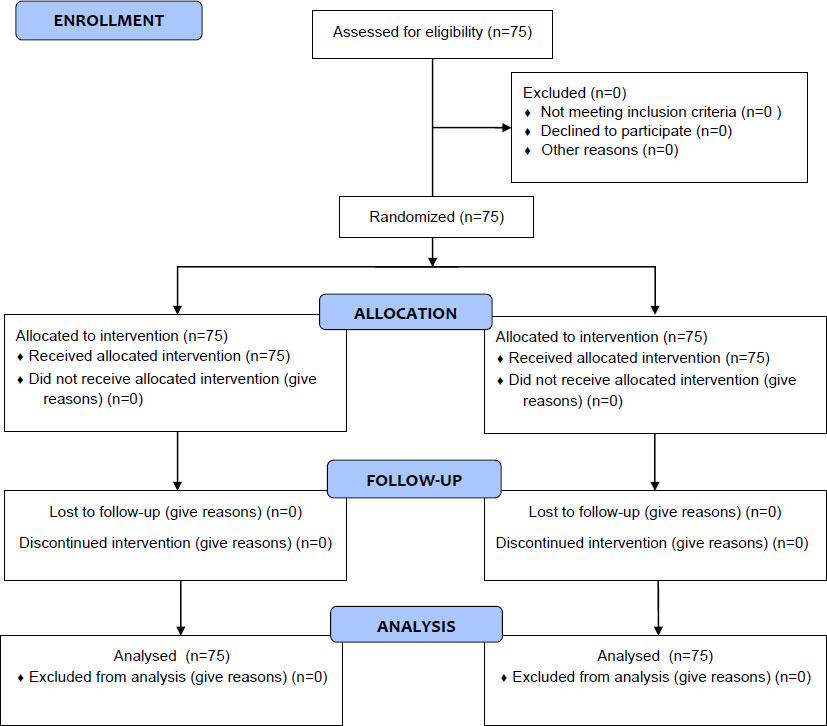
Flow Diagram of the study.
2.2. Diagnostic Criteria (Recruitment)
The sample consisted of subjects of both sexes, over 19 years of age, who presented with pruritus and skin lesions, who agreed to participate in the study and signed their informed consent.
2.3. Inclusion Criteria
Subjects were included if they presented with pruritus mainly at night, skin lesions and their location on the body, and positive dermatoscopy (presence of the parasite).
2.4. Exclusion Criteria
Subjects with the following conditions were excluded from this study: skin lesions with superimposed infection, known hypersensitivity to the products to be used, other previously diagnosed skin lesions, and moderate-to-severe cognitive impairment.
2.5. Treatment Interruption Criteria
Subjects were allowed to withdraw from the study if they did not wish to continue for any reason, or if adverse events occurred that required withdrawal (clinical or documented by complementary tests). Subjects requiring hospitalization for any reason were also withdrawn from the study, as hospitalization was considered a severe adverse event. When there are major violations of the study protocol, given that the data were analyzed according to the intention-to-treat approach, all data from included subjects were analyzed. Data lost to follow-up for any reason were processed using a procedure that replaces them with the parameter data obtained at the previous visit, including the baseline, if applicable (carryover method).
2.6. Use of Concomitant Medications
The use of topical treatments other than those prescribed in the study was not permitted.
2.7. Treatment and Randomization
As stated, eligible subjects were randomized into the following three parallel groups:
Group 1: Dermatological soap with OSO + dermatological cream with OSO.
Group 2: Dermatological soap with sulfur + dermatological cream with OSO.
Group 3: Dermatological soap with sulfur and OSO + dermatological cream with OSO.
The administration was topical, as it was used in the treatment of scabies, and through this route, the effects that support the evaluation of the products have been revealed.
This study was conducted at the 10 de Octubre Clinical Surgical Hospital, and subjects were recruited from the San Francisco de Paula Nursing Home.
The treatment was applied to the three groups in the same way: a daily bath in the afternoon-evening with the assigned dermatological soap and then the application of the cream from the neck down, scalp, and ears, and the consultations were attended to satisfactorily to complete the 21 days of treatment.
Treatments were randomized by group, treatment assigned by balanced block randomization, with a 1:1 ratio for each group, and given to subjects according to their consecutive inclusion in the trial.
Block randomization was computer-generated. To guarantee blinding, none of the researchers involved in the study knew the randomization code, which was independently managed by the National Clinical Trials Coordinating Centre (CENCEC, Spanish acronym) (Havana, Cuba). Sealed participant-specific code-break envelopes were prepared and kept at the Quality Unit in a secure, accessible location.
2.8. Primary Efficacy Endpoints
Clinical cure or improvement and negative dermatoscopy [15] at the end of the study.
Clinical cure: Absence of pruritus and skin lesions.
Clinical improvement: Improvement of pruritus and skin lesions.
The treatment will be considered effective if it achieves a cure or clinical improvement in ≥ 75% of subjects.
2.9. Secondary Efficacy Endpoints
Significant reduction in the total score of the EASI [16] and EVA [17] Scales at the end of the 21 days of treatment compared to baseline values.
2.10. Collateral Efficacy Endpoint
The improvement in the total score of the Quality of Life Questionnaire (EuroQol) [18] at the end of the 21 days of treatment compared to baseline values.
2.11. Safety and Tolerability
Data from a physical examination (bodyweight, pulse rate and arterial pressure), laboratory indicators and requests for Adverse Events (AE) were included for safety and tolerability analysis. All undesirable events that newly appeared in subjects during the trials, disregarding the cause, were considered AE [19]. In accordance with their intensity, AE were classified as mild, moderate, or severe [20].
2.12. Laboratory Analyses
For laboratory analysis, venous blood samples were obtained under fasting conditions for not less than 12 hours nor more than 16 hours. Blood biochemical variables (aspartate aminotransferase [AST], alanine aminotransferase [ALT], glucose, and creatinine) were determined by enzymatic methods using reagent kits (Roche, Switzerland). The determinations were made using automated equipment located in the Hospital's Clinical Laboratory.
Polarized light dermatoscopy was performed by a dermatology specialist using a dermatoscope to observe images of the skin lesions. It is a safe, faster, and simpler technique with sensitivity and specificity equal to or greater than the Muller test [15].
Laboratory determinations and dermatoscopy tests were performed at the beginning and end of the 21-day treatment period.
2.13. Statistical Analysis
Data were analyzed using the intention-to-treat method, and data imputation was performed using the carryover method. Variables with categorical values were presented in contingency tables with absolute values, proportions, and percentages for each category, using Pearson's χ2 test with Yates correction. For quantitative variables, the Student t test was applied if the data followed a normal distribution. If normality was not met, the Rank Sum Test and the Signed Rank Test were replaced by their nonparametric equivalents, and the ANOVA was replaced by the Kruskal-Wallis test.
All statistical tests were two-tailed, and the significance level established a priori for all statistical tests was α=0.05; that is, any p<0.05 was considered significant.
Data management and statistical analysis were performed at the Data Management and Processing Department of the National Clinical Trials Coordinating Center (CENCEC). SPSS 21.0 was used for the analysis, with EPIDAT 3.1 as a specific auxiliary method.
2.14. Sample Size Estimation
The purpose of this study was to determine whether dermatological soap containing OSO, sulfur, or sulfur plus OSO, and a dermatological cream containing OSO produce a significant improvement in clinical manifestations and a negative dermatoscopy result. A significance level of α=0.05 was used, with a type II error of 1-β=0.1 in a two-tailed test, with an equal number of subjects in each study group. According to GPower version 3.1.19.2 (2014), a total of 75 subjects were estimated to be required for the study, 25 subjects per group.
3. RESULTS
3.1. Baseline Characteristics and Group Homogeneity
Seventy-five subjects with scabies were recruited and included in the active treatment phase. Table 1 shows the main characteristics of the study population, which were consistent with the selection criteria and statistically similar in all groups, indicating that they were homogeneous, making randomization optimal.
| Dermatological Soap-OSO +Dermatological cream-OSO (n=25) | Dermatological Soap with Sulfur +Dermatological cream-OSO (n=25) | Dermatological Soap with OSO-Sulfur+Dermatological Cream-OSO (n=25) |
Total (n = 75) |
|||||
|---|---|---|---|---|---|---|---|---|
| Age (years) (X ± SD) | 67 ± 18 | 69 ± 17 | 72 ± 13 | 69 ± 15 | ||||
| Body Mass Index (BMI) (kg/m2) (X±SD) | 19.8 ± 3.6 | 22.1 ± 5.7 | 22.4 ± 6.2 | 21.4 ± 5.4 | ||||
| Sex | n | % | n | % | N | % | n | % |
| Male | 5 | 20.0 | 1 | 4.0 | 1 | 4.0 | 7 | 9.3 |
| Female | 20 | 80.0 | 24 | 96.0 | 24 | 96.0 | 68 | 90.7 |
| Personal history | ||||||||
| Hypertension | 24 | 96.0 | 21 | 84.0 | 23 | 92.0 | 68 | 90.7 |
| Smoking | 6 | 24.0 | 3 | 12.0 | 3 | 12.0 | 12 | 16.0 |
| Diabetes mellitus | 3 | 12.0 | 2 | 8.0 | 4 | 16.0 | 9 | 12.0 |
| Overweight (BMI ≥ 25, < 30) | 1 | 4.0 | 4 | 16.0 | 3 | 12.0 | 8 | 10.7 |
| Obesity (BMI ≥ 30) | 0 | 0.0 | 4 | 16.0 | 4 | 16.0 | 8 | 10.7 |
| Asthma | 2 | 8.0 | 4 | 16.0 | 2 | 8.0 | 8 | 10.7 |
| Coronary disease | 1 | 4.0 | 1 | 4.0 | 2 | 8.0 | 4 | 5.3 |
| Cerebrovascular disease | 2 | 8.0 | 2 | 8.0 | 0 | 0.0 | 4 | 5.3 |
| Thyroids disease | 1 | 4.0 | 1 | 4.0 | 0 | 0.0 | 2 | 2.7 |
| Family history | ||||||||
| Escabies | 8 | 32.0 | 5 | 20.0 | 3 | 12.0 | 16 | 21.3 |
| Concomitant medications (CM) | ||||||||
| Patients consuming CM | 24 | 96.0 | 21 | 84.0 | 23 | 92.0 | 68 | 90.7 |
| Suplements | 14 | 56.0 | 11 | 44.0 | 11 | 44.0 | 36 | 48.0 |
| ACEI | 6 | 24.0 | 8 | 32.0 | 7 | 28.0 | 21 | 28.0 |
| Calcium antagonist | 7 | 28.0 | 3 | 12.0 | 7 | 28.0 | 17 | 22.7 |
| Diuretics | 6 | 24.0 | 4 | 16.0 | 3 | 12.0 | 13 | 17.3 |
| Hypoglycemic agents | 3 | 12.0 | 2 | 8.0 | 4 | 16.0 | 9 | 12.0 |
| Bronchodilators | 2 | 8.0 | 3 | 12.0 | 3 | 12.0 | 8 | 10.7 |
| Antiallergic | 1 | 4.0 | 3 | 12.0 | 0 | 0.0 | 4 | 5.3 |
| β-blockers | 1 | 4.0 | 1 | 4.0 | 1 | 4.0 | 3 | 4.0 |
| Thyroid hormones | 1 | 4.0 | 1 | 4.0 | 0 | 0.0 | 2 | 2.7 |
The table includes only those CM consumed by ≥ 2 patients
All comparisons were not significant (Kruskal-Wallis Test, χ2 test)
The average age of the study population was 69 years, and the distribution by sex showed a predominance of female subjects 68/75 (90.7%) versus 7/75 (9.3%) male subjects.
The included subjects presented other pathological conditions in addition to scabies, such as hypertension (90.7%), smoking (16.0%), diabetes mellitus (12.0%), overweight (10.7%), obesity (10.7%), and bronchial asthma (10.7%). The frequency of concomitant therapy use was 90.7% (68/75), similar across all groups and consistent with their clinical histories, highlighting the use of supplements, antihypertensives, and hypoglycemic agents.
3.3. Treatment Adherence
All included subjects correctly applied the prescribed treatments, according to the subjects' interviews, demonstrating excellent treatment adherence that was similar across all groups and exceeded 95%.
3.4. Efficacy Analysis
Regarding the primary efficacy variable, at the end of the 21-day treatment period, all subjects (75/75-100%) achieved cure or clinical improvement, regardless of the treatment used (dermatological soap with OSO + dermatological cream with OSO, or sulfur soap + dermatological cream with OSO, or sulfur-OSO dermatological soap + dermatological cream with OSO) (Table 2).
|
Cure rate at the end of treatment (21 days) |
Dermatological soap-OSO +Dermatological cream-OSO (n=25) | Dermatological soap with Sulfur +Dermatological cream-OSO (n=25) |
Dermatological soap with OSO-Sulfur +Dermatological cream-OSO (n=25) |
|||
|---|---|---|---|---|---|---|
| n | % | n | % | n | % | |
| Total or Partial Clinical Healing | 25 | 100.0 | 25 | 100.0 | 25 | 100.0 |
| Total Clinical Healing (absence of itching and lesions) |
15 | 60.0 | 16 | 64.0 | 20+ | 80.0 |
| Partial clinical healing (improvement of itching and lesions) |
10 | 40.0 | 9 | 36.0 | 5 | 20.0 |
| Negative dermatoscopy (no presence of the parasite) |
15 | 60.0 | 16 | 64.0 | 20+ | 80.0 |
| Positive dermatoscopy (presence of the parasite) |
10 | 40.0 | 9 | 36.0 | 5 | 20.0 |
| Clinical cure (absence of itching and lesions) and negative dermatoscopy (no presence of the parasite) (no presencia del parasito) |
15 | 60.0 | 16 | 64.0 | 20+ | 80.0 |
+p<0.05 Comparison between groups (χ2 test)
Regarding negative dermatoscopy, the absence of the parasite was achieved in 80% of subjects (20/25) treated with dermatological soap containing sulfur-OSO and dermatological cream containing OSO, 64% of subjects (16/25) treated with sulfur soap and dermatological cream containing OSO, and 60% of subjects (15/25) treated with dermatological soap containing OSO and dermatological cream containing OSO (Table 2 ).
Regarding the clinical cure rate (absence of itching and lesions) and negative dermatoscopy (absence of the parasite), treatment with sulfur-OSO dermatological soap + OSO dermatological cream resulted in a cure rate of 80% (20/25) of subjects, higher than that achieved in the groups treated with sulfur soap + OSO dermatological cream (64%, 16/25 subjects) or with OSO dermatological soap + OSO dermatological cream (60%, 15/25 subjects) (Table 2 ).
Comparisons between groups at the end of treatment show a significant difference (p<0.05) in the group treated with sulfur soap-OSO + dermatological cream with OSO compared to the groups treated with OSO soap + dermatological cream with OSO or with sulfur soap + dermatological cream with OSO (Table 2).
At the beginning of the study, 100% of the subjects presented with itching and skin lesions. At the end of the 21 days of treatment, there was a significant improvement in both pruritus and skin lesions in all groups, with no significant differences between them (Table 3).
| Treatment | 7 days | 14 days | 21 days | ||||||
|---|---|---|---|---|---|---|---|---|---|
| E | B | W | E | B | W | E | B | W | |
| Pruritus | |||||||||
| Dermatological soap-OSO + Dermatological cream-OSO |
0 | 25 | 0 | 5 | 20 | 0 | 0 | 25 | 0 |
| Dermatological soap with Sulfur + Dermatological cream-OSO |
1 | 24 | 0 | 4 | 21 | 0 | 0 | 25 | 0 |
| Dermatological soap with OSO-Sulfur +Dermatological cream-OSO |
0 | 25 | 0 | 7 | 18 | 0 | 0 | 25 | 0 |
| Skin lesions | |||||||||
| Dermatological soap-OSO + Dermatological cream-OSO |
0 | 25 | 0 | 5 | 20 | 0 | 0 | 25 | 0 |
| Dermatological soap with Sulfur + Dermatological cream-OSO |
1 | 24 | 0 | 4 | 21 | 0 | 0 | 25 | 0 |
| Dermatological soap with OSO-Sulfur +Dermatological cream-OSO |
0 | 25 | 0 | 7 | 18 | 0 | 0 | 25 | 0 |
Comparisons between groups were not significant (χ2 test)
Regarding the secondary efficacy variables at 21 days of treatment, all groups achieved a significant reduction (p<0.0001) in the total EASI Scale score and the total VAS Scale score (for pruritus), compared to baseline values (Table 4). In both variables, the comparisons between groups at the end of treatment show a significant difference (p<0.05) in the group treated with sulfur soap-OSO + dermatological cream with OSO compared to the groups treated with OSO soap + dermatological cream with OSO or with sulfur soap + dermatological cream with OSO (Table 4).
| Treatment | Baseline | 7 days | 14 days | 21 days |
|---|---|---|---|---|
| EASI Scale score | ||||
| Dermatological soap-OSO +Dermatological cream-OSO | 31.0 ± 5.5 | 15.6 ± 3.0*** | 11.4 ± 2.8*** | 3.8 ± 1.7*** |
| Dermatological soap with Sulfur+Dermatological cream-OSO | 27.3 ± 5.5 | 14.3 ± 3.2*** | 10.5 ± 2.6*** | 4.5 ± 1.7*** |
| Dermatological soap with OSO-Sulfur+Dermatological cream-OSO | 21.1 ± 4.7 | 9.6 ± 2.3*** | 7.6 ± 2.0*** | 1.4 ± 0.8***+ |
| VAS Scale score | ||||
| Dermatological soap-OSO +Dermatological cream-OSO | 8.0 ± 0.4 | 4.8 ± 0.5*** | 2.9 ± 0.6*** | 1.6 ± 0.5*** |
| Dermatological soap with Sulfur +Dermatological cream-OSO | 7.8 ± 0.5 | 3.6 ± 0.7*** | 2.9 ± 0.6*** | 1.7 ± 0.5*** |
| Dermatological soap with OSO-Sulfur+Dermatological cream-OSO | 7.2 ± 0.5 | 3.4 ± 0.5*** | 2.0 ± 0.4*** | 0.6 ± 0.3***+ |
***p < 0.0001 Comparison versus baseline (Signed Rank test)
+p<0.05 Comparison between groups (Kruskal-Wallis Test)
Regarding the EASI Scale score classification, the frequency of patients who completed treatment without lesions in the group treated with sulfur soap-OSO + dermatological cream with OSO was higher (80%, 20/25) than in the groups treated with OSO soap + dermatological cream with OSO or with sulfur soap + dermatological cream with OSO. However, comparisons between groups at the end of treatment show a significant difference (p<0.05) in the group treated with sulfur soap-OSO + dermatological cream with OSO compared to the groups treated with OSO soap + dermatological cream with OSO or with sulfur soap + dermatological cream with OSO (Table 5).
| Treatment | Baseline | 7 days | 14 days | 21 days |
|---|---|---|---|---|
| n (%) | n (%) | n (%) | n (%) | |
| No injuries | ||||
| Dermatological soap-OSO +Dermatological cream-OSO | 0 (0.0) | 3 (12.0) | 9 (36.0) | 15 (60.0) |
| Dermatological soap with Sulfur +Dermatological cream-OSO | 0 (0.0) | 8 (32.0) | 9 (36.0) | 16 (64.0) |
| Dermatological soap with OSO-Sulfur+Dermatological cream-OSO | 0 (0.0) | 4 (16.0) | 11 (44.0) | 20+ (80.0) |
| Almost no injuries | ||||
| Dermatological soap-OSO +Dermatological cream-OSO | 1 (4.0) | 3 (12.0) | 1 (4.0) | 0 (0.0) |
| Dermatological soap with Sulfur +Dermatological cream-OSO | 2 (8.0) | 0 (0.0) | 0 (0.0) | 0 (0.0) |
| Dermatological soap with OSO-Sulfur+Dermatological cream-OSO | 1 (4.0) | 1 (4.0) | 0 (0.0) | 1 (4.0) |
| Mild | ||||
| Dermatological soap-OSO +Dermatological cream-OSO | 6 (24.0) | 5 (20.0) | 6 (24.0) | 7 (28.0) |
| Dermatological soap with Sulfur +Dermatological cream-OSO | 8 (32.0) | 5 (20.0) | 5 (20.0) | 3 (12.0) |
| Dermatological soap with OSO-Sulfur+Dermatological cream-OSO | 6 (24.0) | 11 (44.0) | 5 (20.0) | 2 (8.0) |
| Moderate | ||||
| Dermatological soap-OSO +Dermatological cream-OSO | 6 (24.0) | 5 (20.0) | 1 (4.0) | 1 (4.0) |
| Dermatological soap with Sulfur +Dermatological cream-OSO | 5 (20.0) | 6 (24.0) | 6 (24.0) | 4 (16.0) |
| Dermatological soap with OSO-Sulfur+Dermatological cream-OSO | 10 (40.0) | 5 (20.0) | 7 (28.0) | 2 (8.0) |
| Severe | ||||
| Dermatological soap-OSO +Dermatological cream-OSO | 6 (24.0) | 9 (36.0) | 8 (32.0) | 2 (8.0) |
| Dermatological soap with Sulfur +Dermatological cream-OSO | 4 (16.0) | 6 (24.0) | 5 (20.0) | 2 (8.0) |
| Dermatological soap with OSO-Sulfur+Dermatological cream-OSO | 4 (16.0) | 4 (16.0) | 2 (8.0) | 0 (0.0) |
| Very severe | ||||
| Dermatological soap-OSO +Dermatological cream-OSO | 6 (24.0) | 0 (0.0) | 0 (0.0) | 0 (0.0) |
| Dermatological soap with Sulfur +Dermatological cream-OSO | 6 (24.0) | 0 (0.0) | 0 (0.0) | 0 (0.0) |
| Dermatological soap with OSO-Sulfur+Dermatological cream-OSO | 4 (16.0) | 0 (0.0) | 0 (0.0) | 0 (0.0) |
+p<.005 Comparison betwenn groups (χ2 test)
Regarding the collateral variable of efficacy at 21 days of treatment, all groups achieved a significant increase (p < 0.0001) in the total score of the EuroQol Quality of Life Questionnaire compared to baseline values. However, comparisons between groups at the end of treatment show a significant difference (p<0.05) in the group treated with sulfur soap-OSO + dermatological cream with OSO compared to the groups treated with OSO soap + dermatological cream with OSO or with sulfur soap + dermatological cream with OSO (Table 6).
| Treatment | Baseline | 21 days |
|---|---|---|
| Life Quality Questionnaire (EuroQol) score | ||
| Dermatological soap-OSO +Dermatological cream-OSO |
65.6 ± 3.7 | 74.0 ± 3.1*** |
| Dermatological soap with Sulfur +Dermatological cream-OSO | 58.0 ± 4.0 | 70.6 ± 3.5*** |
| Dermatological soap with OSO-Sulfur +Dermatological cream-OSO |
69.2 ± 3.8 | 77.9 ± 2.7***+ |
***p < 0.0001 Comparison versus baseline (Signed Rank test)
+p<0.05 Comparison between groups (Kruskal-Wallis test)
3.5. Safety and Tolerability Analysis
3.5.1. Effects on Safety Indicators
In the analysis of the effects on physical and laboratory indicators, no significant changes were obtained in any of the comparisons performed (data not shown for simplicity). Although an increase or decrease in the mean values of some variables was observed at the end of treatment, these changes are not clinically relevant, as all values remained within the ranges considered normal for these variables.
3.5.2. Analysis of Adverse Events
Three subjects in the group treated with sulfur soap + dermatological cream with OSO reported one adverse event (allergic contact dermatitis) during the study, classified as mild. Regarding its classification according to causality, the adverse event reported by the three subjects was classified as highly probable due to the treatments used.
4. DISCUSSION
This study demonstrated, for the first time, that upon completion of the 21-day treatment, all subjects (75/75, 100%) achieved cure or clinical improvement, regardless of the treatment applied for scabies (dermatological soap with OSO + dermatological cream with OSO, or with sulfur soap + dermatological cream with OSO, or with sulfur-OSO soap + dermatological cream with OSO), with comparable safety and tolerability. However, treatment with sulfur-OSO dermatological soap+OSO dermatological cream produced a total clinical cure rate (absence of pruritus and skin lesions) and negative dermatoscopy (no presence of the parasite) in 80% (20/25) of the subjects (considered very satisfactory), and superior to the efficacy achieved in the groups treated with sulfur-OSO dermatological soap+OSO dermatological cream (64%, 16/25 subjects) or with OSO dermatological soap+OSO dermatological cream (60%, 15/25 subjects).
4.1. Study Population
This study included 75 subjects with a clinical diagnosis and positive dermatoscopy of scabies, predominantly female (90.7%) and with an average age of 69 years, which coincides with international reports [21].
Furthermore, the distribution of other personal history was also consistent with that described in other studies [22]. Accordingly, the frequency of concomitant therapy use was 90.7% and corresponded with the pathological history, such that supplements and antihypertensives were the most frequently used medications by the subjects included in the study.
The groups were homogeneous at baseline, as demonstrated by the similarity of their demographic characteristics and the main response variables, which supports the conclusion that the results are attributable to the treatments applied rather than to disparities in the initial conditions of the groups being compared. No subjects dropped out of the study; therefore, 75/75 (100%) of the included subjects completed the study, a very satisfactory figure, given the highly variable dropout rates reported in similar studies [23].
If we add to this the fact that all subjects who completed the study applied the treatments correctly, the validity of the efficacy and safety data obtained is reinforced.
4.2. Efficacy Analysis
At the end of the treatment, 80% of subjects (20/25) treated with sulfur-OSO dermatological soap and OSO dermatological cream achieved parasite clearance (negative dermatoscopy), a figure higher than the 64% of subjects treated with sulfur soap and OSO dermatological cream (16/25) and the 60% of subjects treated with OSO dermatological soap and OSO dermatological cream (15/25). However, 100% (75/75) of subjects treated with any of the combinations used achieved cure or clinical improvement (primary efficacy variables).
Furthermore, treatment with the sulfur-OSO dermatological soap + OSO dermatological cream resulted in a clinical cure rate and negative dermatoscopy in 80% (20/25) (p<0.05) of subjects, which was considered highly satisfactory and superior to the efficacy achieved in the groups treated with sulfur dermatological soap + OSO dermatological cream (64%, 16/25 subjects) or with OSO dermatological soap + OSO dermatological cream (60%, 15/25 subjects).
The cure or clinical improvement rates achieved with the treatments used in this study correspond to those achieved by the treatments recommended and used internationally for the treatment of this disease (70-100%) [24-26]. In accordance with these results, the treatments used achieved a significant reduction in the total score of the EASI and VAS Scales (secondary efficacy variables) at the end of the 21 days of treatment compared to baseline values. Comparisons between groups at the end of treatment show a significant difference (p<0.05) in the group treated with sulfur soap-OSO + dermatological cream with OSO compared to the groups treated with OSO soap + dermatological cream with OSO or with sulfur soap + dermatological cream with OSO for both values (EASI and VAS).
Finally, all treatments achieved a significant increase in the total score of the EuroQol Quality of Life Questionnaire (a collateral efficacy variable) compared to baseline values, while comparisons between groups at the end of treatment for the evaluated variables showed significant differences (p<0.05) in the group treated with sulfur soap-OSO + dermatological cream with OSO compared to the groups treated with OSO soap + dermatological cream with OSO or with sulfur soap + dermatological cream with OSO.
Considering the negative impact of scabies on the quality of life of those who suffer from it, causing physical discomfort due to itching, mental distress, and leading to social isolation due to the stigma associated with this condition, the cure or clinical improvement achieved with the treatments used correlates with the improvement and very positive impact on the quality of life achieved in these subjects, which coincides with what has been reported in other studies [27].
4.3. Safety and Tolerability Analysis
In this study, the treatments showed a safety and tolerability profile consistent with previously reported data for these treatments.
The treatments did not produce any changes in the physical examination or laboratory indicators investigated. No significant differences were found in the comparisons between groups, and the values remained within the ranges considered normal for these variables.
Tolerability was good, as only three subjects in the group treated with sulfur soap + dermatological cream with OSO reported an adverse event (allergic contact dermatitis) during the study, classified as mild and, based on causality, highly likely due to the treatments used.
4.4. Study Limitations
This study employed an open-label, randomized, comparative, parallel-group design, in which 25 subjects per group were randomly assigned to evaluate the effects and safety of the treatments in subjects with scabies. This type of design allows for the simultaneous comparison of different interventions, facilitating a specific interpretation of the effects and safety profile of each therapeutic strategy. Randomization helps balance confounding factors across groups, while the open-label nature (lack of masking) enhances practical transparency regarding product use in a real-world clinical setting, albeit introducing a higher risk of bias in outcome assessment [28].
However, the study has limitations that should be acknowledged. The absence of masking introduces bias in the assessment of subjective symptoms, such as pruritus, and product tolerability. Furthermore, the sample size of 25 subjects per group limits the statistical power to detect small yet clinically relevant differences between interventions that appear similar in this study. Finally, the lack of a placebo group or a control group treated with a reference drug (permethrin) makes it difficult to determine whether the observed improvements are attributable to the products under evaluation, changes in hygiene routines, the placebo effect, or the natural course of the clinical condition [29].
Despite these factors, and the limitations inherent to an open-label study lacking a control group and having a moderate sample size, the results provide valid preliminary evidence regarding the evaluated products and their combination in subjects with scabies. At the same time, they do not allow for definitive conclusions; they serve as a starting point for future research on the subject.
CONCLUSION
Treatment with sulfur-OSO dermatological soap + OSO dermatological cream showed superior efficacy compared to treatment with OSO dermatological soap + OSO dermatological cream, or with sulfur soap + OSO dermatological cream, respectively, in subjects with scabies. Furthermore, the treatments proved to be safe and well-tolerated.
Further studies should confirm these results with a larger sample size and comparison with the gold-standard treatment.
AUTHORS’ CONTRIBUTIONS
It is hereby acknowledged that all authors have accepted responsibility for the manuscript's content and consented to its submission. They have meticulously reviewed all results and unanimously approved the final version of the manuscript.
ETHICS APPROVAL AND CONSENT TO PARTICIPATE
The study protocol was approved by the Ministry of Public Health and by the Ethics Committee in Clinical Research of the “10 de Octubre” Clinical Surgical Hospital (IRB-301123).
HUMAN AND ANIMAL RIGHTS
The study was conducted in accordance with the principles of the Declaration of Helsinki, the recommendations of the World Health Organization, and Cuban regulations on Good Clinical Practices.
AVAILABILITY OF DATA AND MATERIALS
All the data and supporting material is available within the article.
FUNDING
This study was supported by the National Centre for Scientific Research, as part of its research-development projects.
ACKNOWLEDGEMENTS
Declared none.